
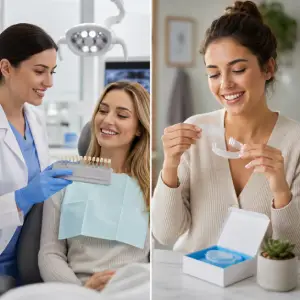
Professional Teeth Whitening vs. At-Home Kits: What Works Best for Stains in Glendale?
When patients compare options for teeth whitening in Glendale, the biggest question is usually, "Should I do it professionally, or try a kit at home?" The best answer depends less on the brand and more on why your teeth are discolored and how to whiten safely without triggering sensitivity or uneven results.
TL;DR - Match Your Stain Type to the Right Whitening Option
If your discoloration is mainly from coffee, tea, wine, or tobacco, you may do well with either professional whitening or a quality at-home approach. If the stain is internal (one tooth darker, gray tone, or discoloration after trauma), you will usually need a dentist-led plan.
- Surface stains often respond well to whitening, especially with a professional plan tailored to sensitivity.
- Yellowing from aging can improve, but may be gradual and limited depending on enamel thickness and dentin color.
- One dark tooth is a red flag for internal discoloration and needs an exam before you waste time on strips.
- Sensitivity risk goes up with overuse and poor fit; customized guidance can help prevent it.
- Clean first for more even results; a recent cleaning helps whitening work better.
In our previous blog, "Enhance Your Smile with a Cosmetic Dentist in Glendale", we discussed how cosmetic dentistry can improve confidence and overall smile appearance. In this article, we focus specifically on choosing the safest and most effective whitening approach for the type of stains you have.
Why Whitening Results Vary So Much
Whitening is not paint. It is a chemical process that can lighten certain tooth colors, but it cannot change every kind of discoloration. Two people can use the same product and see very different outcomes because of:
- Stain type: surface stains vs. internal discoloration.
- Tooth structure: enamel thickness and underlying dentin shade.
- Sensitivity factors: gum recession, exposed roots, cracks, or untreated decay.
- Existing dental work: crowns and fillings do not whiten like natural enamel.
Professional vs. At-Home: The Real Difference
Professional Whitening (In-Office or Dentist-Supervised)
Professional whitening generally means your dentist evaluates your teeth first and uses products and techniques designed for dental supervision. If you are comparing options with a cosmetic dentistry team, the main advantage is not just "stronger gel." It is getting the plan customized to your stain pattern, sensitivity risk, and goals.
- Best for: moderate to heavy surface staining, patients prone to sensitivity, or patients who want a more controlled plan.
- Upside: customized dosing, guidance for sensitivity, and professional screening for problems that could make whitening uncomfortable.
- Potential downside: may cost more than store-bought products, and you still need good maintenance habits.
At-Home Whitening Kits (Strips, Trays, Pens)
At-home whitening products can be helpful for mild surface stains and touch-ups, especially if you are consistent and use them correctly. The biggest limitation is that they are not truly personalized: they cannot account for uneven enamel, gum recession, or hidden issues that make whitening unpredictable.
- Best for: mild staining, people who want gradual improvement, and maintenance after professional whitening.
- Upside: convenience and lower up-front cost.
- Potential downside: increased risk of patchy results or sensitivity if overused or if the product does not fit well.
Stain Types: What Works Best for Each One
Use this section as a decision guide before you spend money (or time) on whitening.
Coffee, Tea, Red Wine, and Tobacco (Surface Stains)
These are classic extrinsic stains that sit on or near the surface. Many patients see meaningful improvement with whitening, especially when they start with a clean surface.
- Often works well with: professional whitening or consistent at-home whitening over time.
- Key tip: consider a professional cleaning first so the whitening can reach the enamel evenly.
If it has been a while since your last visit, scheduling a teeth cleaning can be a smart first step before whitening.
Yellowing from Aging (Deeper Color Changes)
As we age, enamel can become thinner and the underlying dentin shows through more. Whitening can still help, but it may take longer and may not reach an ultra-bright shade safely.
- Often works well with: a dentist-supervised plan, especially if you are sensitive.
- What to expect: improvement, not perfection, and the final shade varies by person.
One Tooth Is Darker (Internal Discoloration)
If a single tooth looks gray, brown, or noticeably darker than the rest, it can be a sign of internal discoloration (sometimes after trauma or a prior dental issue). This is the type of situation where strips and generic kits often disappoint.
- Often works well with: a dental exam first, then dentist-recommended options.
- Important note: internal discoloration may require different cosmetic approaches than standard whitening.
Our team often sees patients who tried multiple over-the-counter products first, only to learn the stain was not the "whitenable" kind. A short evaluation can save weeks of frustration.
Staining Around Old Fillings or Crowns
Whitening gels change natural enamel color, but they do not lighten porcelain crowns or most fillings. If you have visible dental work in your smile line, whitening may create a mismatch.
- Often works well with: a dentist-led plan that considers existing restorations.
- What to ask: whether whitening first makes sense before replacing or adjusting older restorations.
Where "Teeth Whitening Glendale" Searches Go Wrong: Common Mistakes
- Skipping the exam: whitening on a cavity or irritated gums can turn into avoidable pain.
- Overusing strips: more is not better; it often equals more sensitivity.
- Expecting crowns to whiten: they will not, and the contrast can look uneven.
- Not addressing the cause: if discoloration is internal, the plan needs to change.
Questions to Ask a Cosmetic Dentist Before You Whiten
If you are consulting a cosmetic dentist in Glendale, these questions keep the conversation practical and focused on your results and safety:
- What type of discoloration do you think I have (surface vs. internal)?
- Am I likely to experience sensitivity, and what can we do to reduce it?
- Will my existing fillings, crowns, or bonding affect how even my final shade looks?
- Should I do a cleaning first, or address any gum irritation before whitening?
- What realistic shade change should I expect based on my starting color?
When Professional Whitening Is Usually the Better Choice
Professional whitening is often the better match if:
- You have a history of sensitivity or gum recession.
- You want a more even, controlled outcome (especially for photos or events).
- You have mixed dental work and want a plan that avoids mismatched shades.
- You suspect internal discoloration or you have one tooth that does not match.
For a deeper overview of whitening options offered in our office, you can also read our main teeth whitening treatment page.
FAQs
Most surface (extrinsic) stains from coffee, tea, red wine, and tobacco typically respond well to professional whitening because treatment can be tailored to your teeth, sensitivity risk, and stain severity.
Some at-home kits can help mild to moderate yellowing, but results vary with product strength and fit. If the yellow tone is mainly from thinning enamel over time, you may see improvement, but it may be limited and slower than professional options.
Sensitivity often happens when peroxide penetrates the tooth and temporarily irritates the nerve, especially if you already have gum recession, exposed roots, or microcracks. Overuse, higher concentrations, or poorly fitting products can increase sensitivity.
A single dark tooth is often due to internal discoloration, which may not respond well to over-the-counter products. A dental evaluation can determine whether options like internal bleaching or a cosmetic restoration are more appropriate.
A professional cleaning can remove surface buildup and stains, helping whitening products work more evenly. It also helps your dentist check for cavities or gum inflammation before you start.
Choose an option that matches your stain type and oral health. A dentist can check for decay, gum recession, and existing dental work, then recommend a plan that prioritizes enamel safety and minimizes sensitivity.
Related Reading
Conclusion: Choose the Option That Fits Your Teeth, Not Just Your Timeline
Professional whitening and at-home kits can both brighten a smile, but they are not interchangeable. The fastest way to avoid sensitivity, uneven color, and wasted effort is to match the method to the stain type and your oral health. If you are unsure where to start, a brief evaluation can clarify what is causing the discoloration and what results are realistic.
Call to Schedule
If you want help choosing the best whitening approach, schedule a visit with Dr. Edik Havghverdian DDS at Smile Dental Practice. Call 818-500-7740 to get started.
Clinical observation (experience-based): Our team often finds that patients who start with a cleaning and a personalized plan tend to report more comfortable whitening and fewer "patchy" areas than those who begin with random over-the-counter products.
based on 100 reviews
based on 1 reviews
based on 40 reviews
based on 1 reviews
based on 5 reviews
based on 100 reviews
based on 1 reviews
based on 40 reviews
based on 1 reviews
based on 5 reviews