
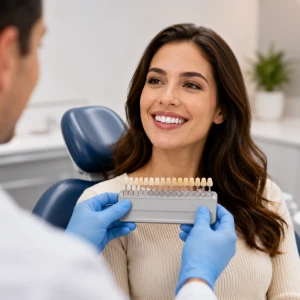
Search results for teeth whitening in Glendale can feel like a mix of dental offices, med spas, and listicles all promising fast results. The truth is: whitening can work very well, but only when the option matches your stain type, your sensitivity risk, and what you are actually trying to change (overall shade vs one dark tooth).
This guide is a consumer-friendly menu of whitening options, including what tends to work, what tends to disappoint, and the common reasons people spend money and still do not like their results.
If your goal is a noticeably brighter smile without wasted money or painful sensitivity, start by identifying your stain type and whether you need a cleaning or have dental work that will not whiten.
In our previous blog, "Best Teeth Whitening for Stains: Pro vs. Kits," we discussed how stain type affects results. In this article, we focus on how to choose among all the common options and avoid the most expensive mistakes.
Two people can use the same whitening approach and get very different outcomes. In our experience, the biggest reasons are:
In-office whitening is designed for patients who want a strong, noticeable change quickly and want the process supervised. The main advantage is professional monitoring, especially if you are prone to sensitivity or have gum recession that needs extra protection.
If you are comparing options with a cosmetic dentist in Glendale, ask what they do to reduce sensitivity and protect gums during treatment.
Custom trays are made to fit your teeth closely, helping whitening gel stay where it is supposed to be. This can mean more even results and less gum irritation than one-size-fits-all options.
Strips can be a reasonable place to start if your teeth are generally healthy and your main issue is mild to moderate yellowing. They tend to be less predictable if you have crowding, uneven tooth shapes, or a mix of natural teeth and restorations in the smile zone.
Whitening toothpastes are best thought of as stain management. They can help remove surface stain over time, but they usually do not deliver the same kind of shade shift as peroxide-based whitening gels.
Many trendy options are not necessarily dangerous, but they are often disappointing for the price. The common issue is poor contact time and inconsistent gel placement. Be especially cautious with unverified online products that promise extreme whitening quickly or do not clearly explain ingredients and usage instructions.
If you are overdue for hygiene, a professional cleaning can be the best first step. It removes plaque and surface stain so whitening can look more even.
If you are planning ahead, you can review our teeth cleaning page to see what a typical cleaning visit includes.
Crowns, veneers, and tooth-colored fillings do not lighten with whitening gel. If any of those are visible when you smile, a dentist can help you plan the order of treatment (for example: whiten first, then match future restorations to your new shade).
For patients considering multiple cosmetic improvements, our dental bonding page is a helpful starting point for how small repairs can blend with your natural tooth color.
Sensitivity is the number one reason patients quit mid-treatment. The goal is not "power through it." The goal is to adjust the approach so you can finish comfortably.
Whitening is popular, but it is not always the best starting point. Consider a dental exam first if you have:
If you know you want professional care, our teeth whitening treatment page outlines whitening options offered through our office.
A good whitening plan is conservative and personalized. It should answer:
Dr. Edik Havghverdian DDS and our team focus on matching the whitening method to your goals and comfort level so you can get a noticeable change without unnecessary sensitivity or repeat spending.
Most "bad whitening experiences" come from a mismatch: the wrong product for the stain, the wrong strength for sensitivity, or whitening done without accounting for cleanings and existing dental work. If you want a brighter smile that looks natural, choose a method that fits your teeth, your timeline, and your comfort level.
If you want help choosing the best option for teeth whitening in Glendale, our team at Smile Dental Practice can walk you through the choices and what to do first. Call 818-500-7740 to schedule a visit.
Clinical observation: Our team often sees that patients get the most even whitening results when they start with a clean, healthy foundation and use a plan that is adjusted early if sensitivity shows up.
Accreditation





SCHEDULE AN APPOINTMENT TODAY AT DENTAL OFFICE IN GLENDALE
Getting your dream smile is easier than you think.
At Smile Dental Practice we welcome you on the journey towards a complete transformation of your smile! Please contact us if you have any questions or to schedule a consultation.

Accessibility Menu

based on 100 reviews
based on 1 reviews
based on 40 reviews
based on 1 reviews
based on 5 reviews
based on 100 reviews
based on 1 reviews
based on 40 reviews
based on 1 reviews
based on 5 reviews