
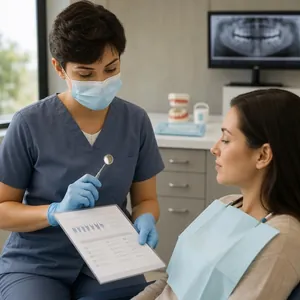
Many people book a routine visit because they know a professional cleaning helps keep their mouth fresh. But the real value of a consistent appointment is what it can prevent. A thorough teeth cleaning in Glendale, California is often paired with an exam that helps identify small changes early, before they turn into pain, emergency visits, or bigger treatment plans.
This article breaks down what a checkup can catch, what to ask during your visit, and how to think about visit frequency in a practical way.
A routine cleaning plus exam can reveal early signs of decay, gum disease, cracks, and bite wear. Catching issues early usually means simpler treatment and fewer surprises.
In our previous blog, "Best Teeth Whitening for Stains: Pro vs. Kits," we discussed how stain type affects results. In this article, we focus on how a cleaning and checkup help catch problems early, even when everything feels fine.
Bleeding when you brush, puffiness along the gumline, or persistent bad breath can be early signs that your gums need attention. During a checkup, a dentist can look for changes that are easy to miss at home, especially between teeth and along the back molars.
For a deeper preventive overview, our related page explains why preventive dentistry matters for long-term oral health.
Tooth decay does not always hurt at first. Early cavities can form in grooves, along the gumline, or between teeth where brushing cannot fully reach. Your exam may include checking areas that are not visible in a mirror at home.
Many patients are surprised to learn they grind or clench, especially if they do it during sleep. A checkup can reveal flattened biting edges, small chips, or shiny wear spots that can signal ongoing pressure. Addressing wear early can help protect enamel and reduce the risk of fractures later.
Not all cracks are obvious, and some do not show up as pain right away. Early detection can matter because a crack that is stable today can deepen over time with chewing pressure. If your dentist suspects cracking, they may recommend monitoring, protecting the tooth, or addressing contributing factors like grinding.
If you have symptoms like sharp pain when biting or intermittent sensitivity, you may also want to review our page on cracked teeth treatment.
Dental work is designed to be durable, but it still needs maintenance. Over time, fillings can wear down, edges can lift slightly, and tiny gaps can allow bacteria in. Your checkup helps evaluate whether existing restorations are still sealing and protecting the tooth underneath.
When a tooth needs extra protection, our page on dental crowns explains how crowns can restore strength after damage or decay.
One reason regular exams matter is that your dentist checks more than teeth. Changes in the tongue, cheeks, and gums can sometimes signal irritation or other concerns. If something looks different from your baseline, your dentist can advise the appropriate next step, which may be as simple as rechecking at a future visit.
Home care is essential, but brushing and flossing cannot remove hardened tartar once it forms. Professional cleaning removes plaque and tartar buildup that can irritate gums and contribute to decay. It also gives your dental team a cleaner "view" to evaluate your teeth and gums accurately.
If you want to see what is typically included, visit our teeth cleaning in Glendale service page.
Many patients are commonly advised to come in about every six months, but that is not a rule for everyone. Some patients need more frequent visits due to gum concerns, heavy tartar buildup, orthodontic appliances, or higher cavity risk. Others may be appropriate for a different schedule based on their history and home care.
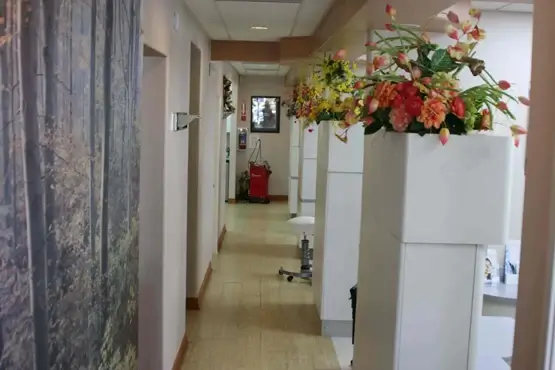
If you are looking for a dental office in Glendale that can help you personalize prevention, our Our Office page can help you get familiar with the practice before you schedule.
If your goal is to prevent bigger problems, consider using this quick checklist before you leave your appointment:
Clinical observation: Our team often finds that patients who feel totally fine can still have early gum inflammation or small bite wear that only becomes noticeable after it progresses. Regular checkups help catch those changes while solutions are still simple.
A "normal" visit is not just a cleaning. It is a chance to catch gum inflammation, early decay, wear patterns, and small cracks while they are still manageable. If you have been putting off routine care, the best time to reset is before you have symptoms.
If you are looking for a dentist in Glendale and want a preventive visit that focuses on catching issues early, Dr. Edik Havghverdian DDS and our team at Smile Dental Practice are here to help. Call 818-500-7740 to schedule.
Accreditation





SCHEDULE AN APPOINTMENT TODAY AT DENTAL OFFICE IN GLENDALE
Getting your dream smile is easier than you think.
At Smile Dental Practice we welcome you on the journey towards a complete transformation of your smile! Please contact us if you have any questions or to schedule a consultation.
Accessibility Menu


based on 100 reviews
based on 1 reviews
based on 40 reviews
based on 1 reviews
based on 5 reviews
based on 100 reviews
based on 1 reviews
based on 40 reviews
based on 1 reviews
based on 5 reviews